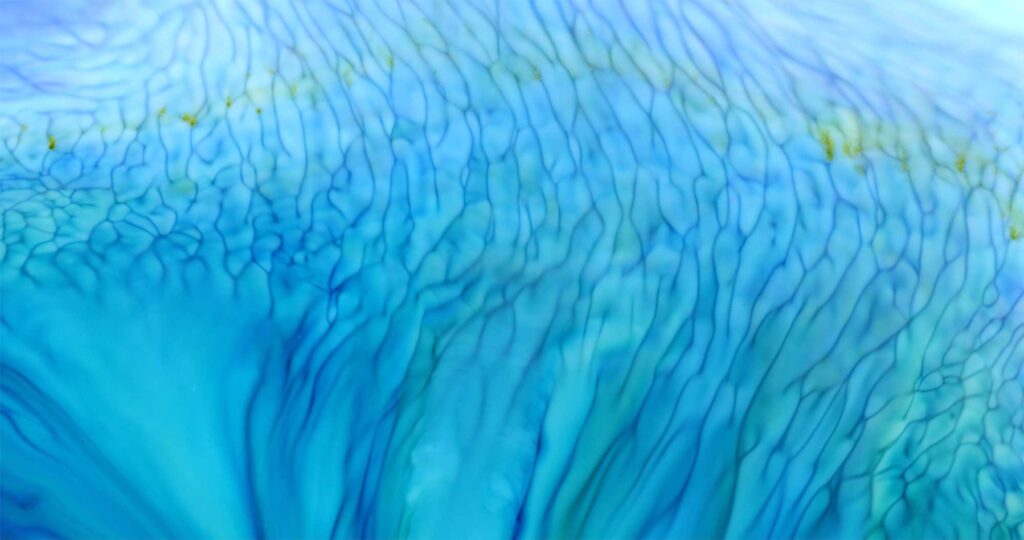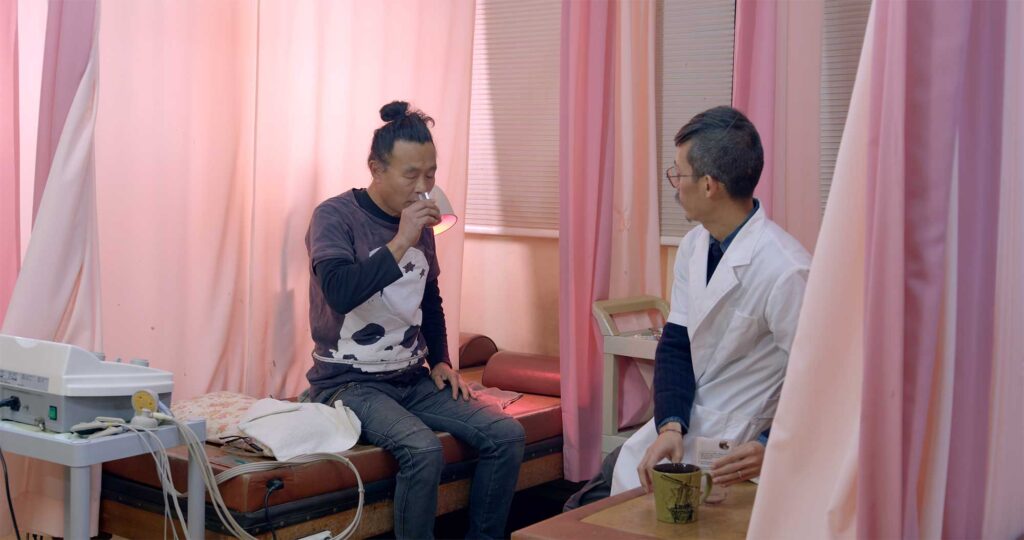

What happens when two people share a life but cannot always express themselves through the same language? Our short film In Flux takes that familiar challenge in an unexpected direction. Set on Jeju Island, it follows an intercultural couple who attempt to develop an elixir that will allow them to communicate telepathically.
Nils Clauss and Udo Lee co-directed the film as a personal collaboration. Rather than make a conventional documentary about multiculturalism in South Korea, we combined a real relationship with an imaginative experiment. The result sits somewhere between documentary observation, fiction and an artwork.
An Unusual Story About Language Barriers
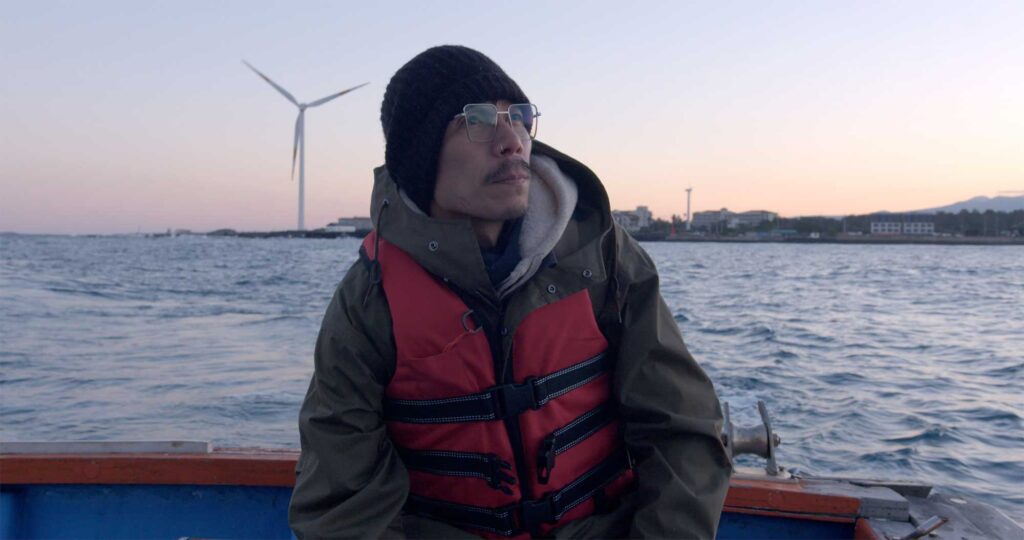
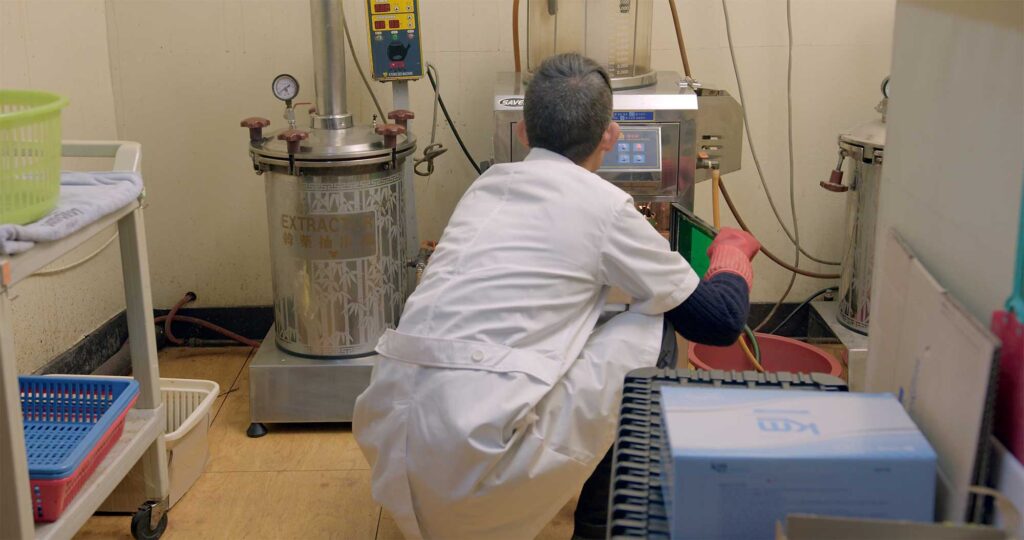
At the centre of In Flux are Somi, a Chinese family therapist and researcher, and Jin, her Korean partner, who practises traditional Korean medicine. They bring their professional knowledge and personal experiences to an ambitious experiment: creating an elixir that could make spoken language unnecessary.
The premise is deliberately unusual, but the problem behind it is familiar. Couples who speak different first languages often develop their own ways of communicating. Words are only one part of that exchange. Gestures, habits, shared experiences and misunderstandings all shape how people understand one another.
By following Somi and Jin’s experiment, we could address these questions without relying on interviews or a conventional explanation of migration. Their attempt to communicate telepathically gives the film a narrative while leaving room for humour, uncertainty and interpretation.
Looking Beyond Conventional Ideas of Multiculturalism
The project began with conversations about migration and international marriage in South Korea. As the country became more culturally diverse, relationships between Korean citizens and partners from other countries became an increasingly visible part of public discussion.
We were interested in how these relationships are represented. Discussions about multiculturalism often focus on integration, cultural differences and the challenges of adapting to a new society. Those issues matter, but they do not describe everything that happens between people from different backgrounds.
With In Flux, we wanted to move away from treating multiculturalism as a problem that needs a fixed solution. Somi and Jin’s search for telepathic communication takes the idea to an absurd extreme. Yet it also suggests that understanding another person involves more than finding the correct words.
The film leaves that possibility open. It does not present the couple’s experiment as a scientific claim or offer an answer to the difficulties of communication. Instead, the fictional premise creates space to consider what people might discover when they move beyond familiar assumptions.
Why We Filmed on Jeju Island
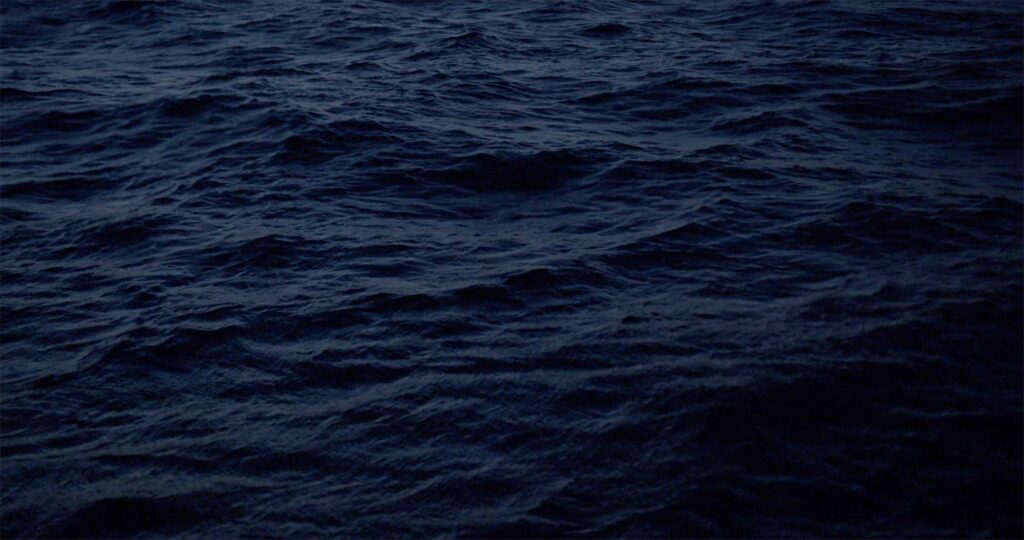
We shot In Flux against the volcanic landscapes of Jeju Island, off South Korea’s southern coast. The setting gave the film a different character from a story situated in Seoul’s dense urban environment.
Jeju’s open terrain, coastline and volcanic formations became part of the film’s imagery. The landscape also provided a setting for Somi and Jin’s unusual research, placing their experiment outside the everyday spaces where viewers might expect to encounter a story about marriage or migration.
We did not want the location to serve merely as an attractive backdrop. The physical environment became part of how we photographed the couple and developed the film’s atmosphere. Its presence helps distinguish In Flux from a factual account of an intercultural relationship.
Co-Directing the Film With Udo Lee
In Flux grew out of an ongoing creative collaboration between Nils Clauss and Udo Lee. The two had already worked together on commercial and independent projects, including Plastic Girls, before co-directing this film.
For In Flux, Nils also handled cinematography, editing and colour grading. This allowed us to develop the project across filming and post-production while maintaining a close connection between the original idea and the finished piece.
The film’s combination of documentary material and an invented premise gave us considerable creative freedom. We could work with Somi and Jin’s real backgrounds while developing a story that did not need to follow the conventions of factual television.
That distinction was important. We were not trying to document a scientific investigation into telepathy. The experiment provided a way to approach questions about intimacy, cultural difference and communication through cinema.
From Jeju to Museum Exhibitions in Korea and Taiwan
The Gyeonggi Museum of Modern Art commissioned In Flux for its group exhibition Moving & Migration. In 2019, the film appeared at the Gyeonggi Museum of Modern Art in Ansan, South Korea, and the Kaohsiung Museum of Fine Arts in Taiwan.
This exhibition context influenced the project’s direction. We were making a film for audiences encountering migration through contemporary art, rather than a television documentary built around interviews, statistics or expert commentary.
The film later received a Vimeo Staff Pick and appeared in coverage by Directors Notes and BOOOOOOOM TV. These platforms introduced In Flux to audiences beyond its original museum presentations.
Communication Beyond Words
The central experiment in In Flux may be impossible, but it gives Somi and Jin a reason to pursue a very human ambition: understanding one another more completely.
Their relationship brings questions of language and cultural difference into an intimate setting. The film uses that setting to consider multiculturalism without reducing it to a set of social categories or expected outcomes.
For us, the interest lies in the gap between what people say and what they understand. In Flux turns that gap into an unusual story, using documentary observation and fiction to examine a subject that affects relationships far beyond South Korea.
Watch the film and see the full credits on our In Flux project page.